Mobile concrete mixing plants for large-scale projects
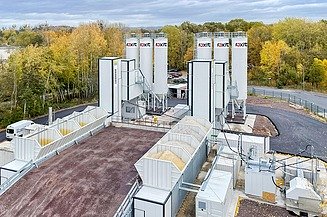
As a specialist in mobile concrete mixing plants, we have been developing and operating customised plant solutions for large construction sites around the world for more than 25 years. Our approach is straightforward: producing concrete where it is needed – directly on your jobsite. Whether for tunnel construction, dams, infrastructure measures, large-scale projects or complex engineering structures, we ensure a reliable, continuous and economical supply of concrete, even in demanding environments.
Why choose mobile concrete mixing plants?
Operating a mobile concrete mixing plant on-site ensures a maximum level of supply reliability through
- short distances
- fast availability
- independent, precisely timed concrete supply
- consistent quality without transport-related losses
- reduced dependence on external suppliers
We engineer our mobile plants to specifically match the requirements of your project.
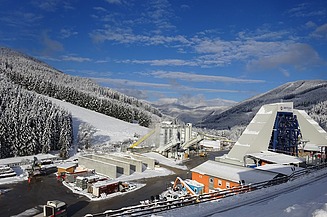
Turnkey solution on site
We plan, design, construct, operate and dismantle the entire plant for you, including logistics, material preparation and quality assurance. The result is an integrated, project-specific turnkey solution that streamlines construction workflows and minimises operational risks. Particularly for projects with high daily volumes, tight time frames or 24/7 operations, mobile concrete production is a decisive advantage.
Reference projects
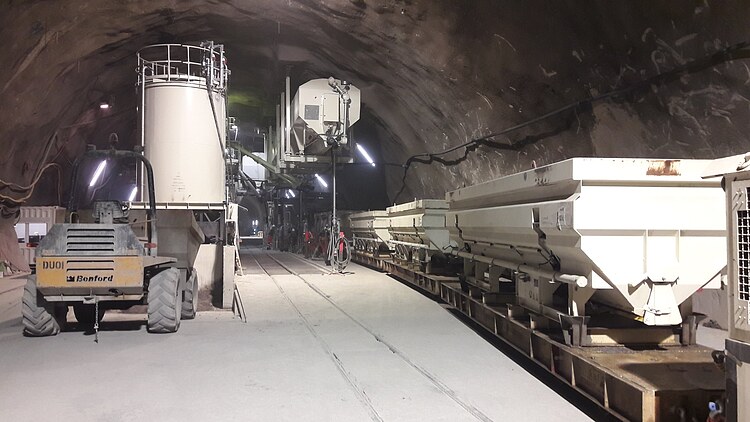
Koralm Tunnel Section KAT2, Austria
Shotcrete and concrete for the interior tunnel lining, processing of tunnel excavated material, concrete for segment production
Client: STRABAG / Jäger consortium
Construction period/performance period: 2011 to 2021
Order volume: 1,000,000 m³ of concrete / 2,000,000 t of processed tunnel excavated material
Challenge: Processing tunnel excavated material for concrete production in variable geological conditions.
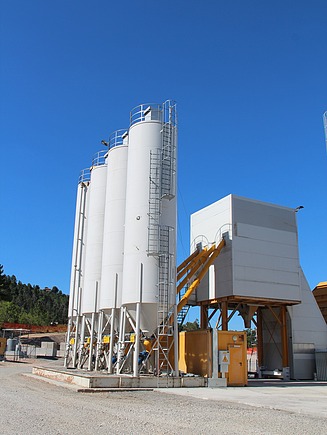
Solution: Operation of three concrete mixing plants and one aggregate processing plant (up to 2,500 t/day) as well as an additional mixing plant underground.
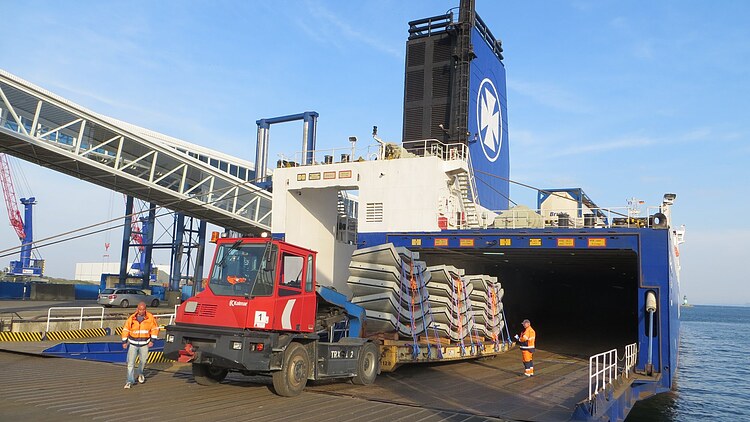
Cityringen Metro Copenhagen, Denmark
Production of segments at our site in Sassnitz and shipment to Copenhagen
Client: Copenhagen Metro Team
Construction time/performance period: 2013 to 2016
Order volume: 125,000 segments / 140,000 m³ of concrete
Challenge: Ongoing supply of the construction site via sea transport to ensure continuous tunnel excavation.
Solution: High-throughput production using a circulating plant system combined with RoRo sea transport logistics.
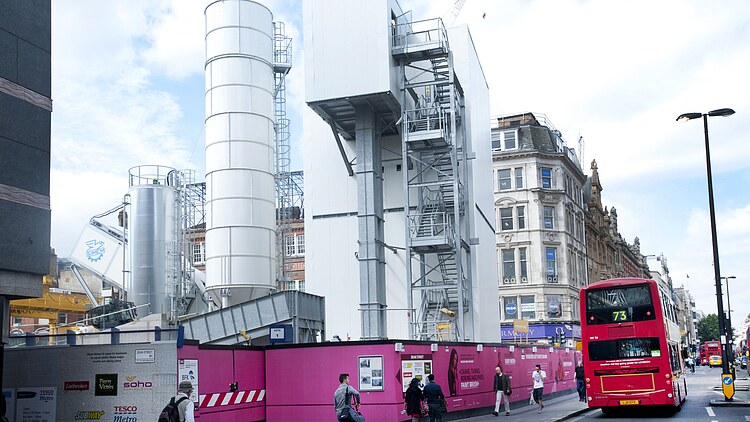
Crossrail C300 and C410, London
Shotcrete and annular gap mortar
Client: Team BFK (BAM / Ferrovial / Kier)
Construction time/performance period: 2012 to 2014
Order volume: 57,000 m³ of concrete / 46,000 m³ of annular gap mortar
Challenge: Production in the heart of London (Oxford Street) under extremely constrained site conditions with minimal available space.
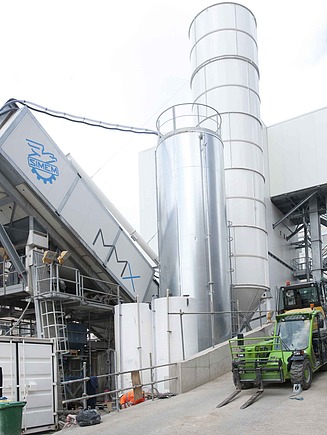
Solution: Construction of a purpose-designed concrete mixing plant and a tower silo for aggregates.
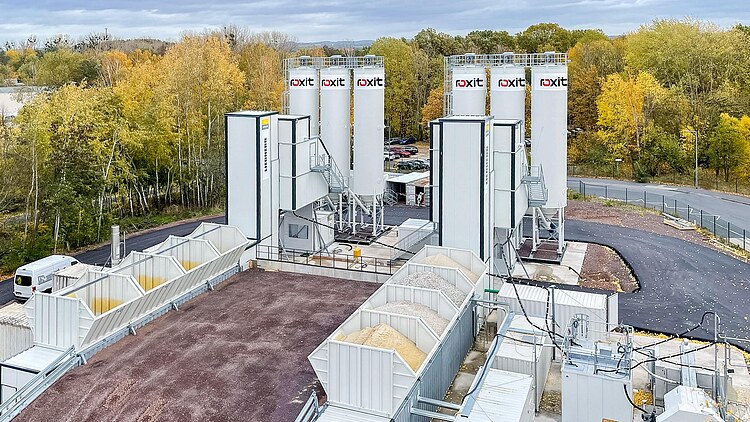
Infineon Dresden, Germany
Concrete for construction of a microchip factory
Client: STRABAG
Construction time/performance period: October 2023 to October 2025
Order volume: 150,000 m³
Challenge: High hourly output requirements for large-scale foundation pours during construction of the factory building.
Solution: Construction of a high- capacity dual mixing plant to guarantee continuous production performance even at peak demand times.
Further reference projects can be found here:

List of references roxit
Which projects are best suited for mobile concrete production?
Our plants are used wherever large volumes of concrete are required within short timeframes:
- Tunnel construction (road, rail, underground)
- Large-scale civil engineering projects (e.g. clean rooms for chip production, LNG tanks)
- Dams and hydraulic engineering
- Industrial plants
- Infrastructure projects (roads and traffic route construction)
- Remote locations without nearby concrete plants
- Projects with high quality requirements
- Projects with 24/7 operations
We operate on a global scale for major international clients, joint venture consortia and specialised infrastructure procurement partners. In project business alone, we have to date supplied more than 17 million cubic metres of concrete to satisfied clients worldwide.
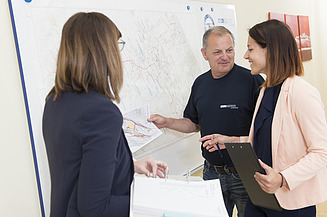
Proven processes and reliable execution
For more than two decades, we have been delivering mobile concrete production solutions worldwide. We are familiar with the technical, logistical and organisational requirements of large-scale construction projects and deliver
- ISO-certified quality (ISO 9001, ISO 50001)
- EPDs with external certification
- documented testing and quality processes
- clear project workflows
- transparent communication
Project workflow: How we work
As a provider of end-to-end project solutions for mobile concrete mixing plants, we follow a clear, proven and transparent process.
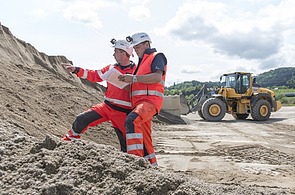
Are you planning a major project?
roxit is your first point of contact for mobile concrete mixing plants for large construction sites worldwide. Talk to us about your project – we will develop the right solution for your requirements.
Get in touch with usFrequently asked questions (FAQ) about mobile concrete mixing plants for large construction sites
-
How long does it take to set up a mobile concrete mixing plant?
Depending on project size and infrastructure, set-up typically takes a few weeks. Planning and preparation run in parallel.
-
Which production capacities are possible with mobile systems?
Capacity is designed on a project-specific basis. High daily production volumes for tunnelling or segment production can be realised without difficulty.
-
How much space is required?
Space requirements depend on the plant configuration. We develop layouts that maximise efficiency, even on sites with limited available space.
-
Which types of concrete can be produced?
All types of concrete required for the specific construction project, from shotcrete and in-situ concrete to high-strength special concretes.
-
How is quality ensured?
Through mixing accuracy, recipe fidelity, testing procedures, documentation and ISO-certified quality standards.
-
Which projects are mobile concrete mixing plants best suited for?
For tunnel construction, infrastructure, civil engineering, large-scale projects, remote locations and projects with high daily production volumes or hourly outputs. In tunnel construction, we provide a one-stop-shop solution, ranging from the processing of tunnel spoil into aggregates for concrete production to the supply of in-situ concrete in the form of shotcrete or any other type of concrete, the production and delivery of precast segments and annular gap filling materials, as well as consulting services.
-
Is on-site production of segments possible?
Yes. We operate our own segment production facilities and can also set up production directly on the construction site whenever required.
-
Can annular gap mortar be produced?
Yes. We produce annular gap backfill material for TBM tunnelling directly on site.
-
Is it possible to reuse excavated material?
Yes. We process tunnel excavated materials on the construction site into aggregates for concrete production.
-
How does the collaboration process work?
We take care of the entire process for you: analysis, planning, construction, operation, quality assurance and dismantling – all from a single source, thereby providing a seamless, reliable process without additional effort for your team.
-
What are the costs of a mobile concrete mixing plant on a construction site?
We design each plant on a project-specific basis and calculate the price individually according to your requirements. Costs depend strongly on the individual project: required capacities, concrete types, site conditions, logistics, operating times and additional services such as aggregate processing or segment production. A mobile solution is often more economical than external supply.
-
Can a mobile concrete mixing plant have a positive impact on a project's environmental footprint?
Short distances, fewer lorry journeys, the use of locally available materials and to-the-point, demand-based concrete production can reduce CO₂ emissions. Optimised formulas further support resource-conserving construction methods. Large-scale projects, in particular, can therefore achieve a significantly better environmental footprint.