Stone and gravel for construction expertise

Stone and gravel are among the most essential building materials in the construction industry. They provide load-bearing capacity, stability, frost resistance and drainage, and serve as aggregate components in concrete and asphalt production. As a result, their range of applications is extensive: they are used in civil engineering (foundations, roads, pipeline construction), building construction (ceilings, columns, walls), residential construction (floor slabs, cellars, outdoor areas), gardening and landscaping (pathways, retaining walls, gabions), industrial sites (factory floors, logistics areas), railway lines (track bed, sub-base), hydraulic engineering (riverbank and embankment protection) and flood protection systems (dams, protective structures). Given their critical role, it is all the more important that the quality, availability and procurement of gravel and stone for construction projects are as straightforward and reliable as possible.
What to look out for when purchasing stones and gravel
The wider the range of applications, the more important it becomes to have clearly defined product ranges, standards-compliant grain sizes, fast delivery routes and straightforward advice from the right points of contact. Today, anyone looking to purchase stone and gravel is not just looking for materials, but for:
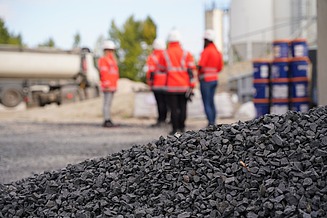
- a reliable supply, even for large or fluctuating volume requirements
- proximity within the region, to reduce transport costs and CO₂ emissions
- predictable pricing and material availability
- clear and responsive points of contact
This is exactly where we come in: roxit supports construction and infrastructure projects with high-quality, locally sourced raw materials backed by expert guidance and tailored to each specific project – reliable, standards-compliant and sustainable throughout the entire construction process.
The challenges we help solve
Today’s construction, infrastructure and industrial construction projects face a growing range of challenges. Material quality can fluctuate, delivery delays can bring work to a standstill, and public-sector clients increasingly require strict compliance with standards and sustainability requirements. At the same time, project teams are under constant pressure to meet tight schedules and control costs. Civil engineering and traffic route construction projects, in particular, frequently require large volumes of materials over extended periods, often with peak loads or short-term surges in demand. The raw materials and building materials industry, for its part, depends on a reliable supply of intermediate products, while recycling and waste management companies require proof of quality and regulatory clarity. Public contracting authorities expect transparent documentation and certified quality, industrial and commercial buildings require stable sub-bases, and environmental and landfill projects are subject to strict requirements regarding land reclamation and material acceptance.
Why roxit?
roxit is your trusted source for the reliable supply of raw materials – stone and gravel – based on partnership and dependable performance.

Why clients choose roxit for stone and gravel
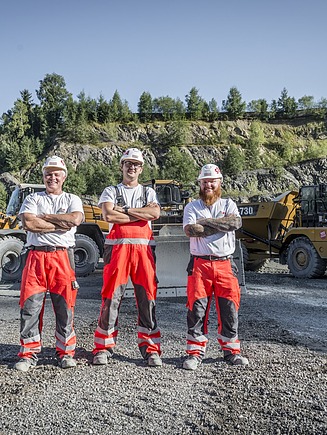
Clients choose roxit because they can depend on consistent quality, even for large or fluctuating order volumes, dependable deliveries, expert technical support and a commitment to continuous process improvement. Many of our sites also have rail logistics facilities, expanding our delivery capabilities and strengthening supply reliability. What truly sets us apart is the way we work: we think proactively, take a solution-oriented approach and actively support our clients throughout their projects. Our teams assist with selecting the appropriate grain sizes, questions about standards and applications, project-specific custom solutions, and coordinating with concrete and asphalt plants. In doing so, we take joint responsibility not only for supplying materials, but also for their performance, workability and overall project success.
Production sites in our core countries
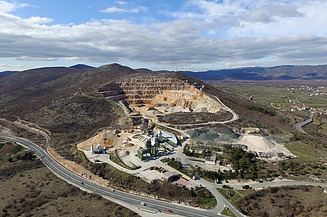
roxit is one of the leading raw materials brands in Central, South-Eastern and Eastern Europe. With around 90 quarries and gravel pits, we ensure a reliable supply of high-quality mineral raw materials that form the basis for essential construction activities. In multiple countries across Central, South-Eastern and Eastern Europe – including the Czech Republic, Slovakia, Hungary, Slovenia, Croatia, Romania, Bulgaria, Montenegro and Serbia – and in Austria, we operate a comprehensive network of quarries, gravel pits and recycling plants. Strong technical expertise, innovative know-how and an efficient internal infrastructure enable us to respond quickly and flexibly to our clients’ growing demands.
Regional differences in our product range
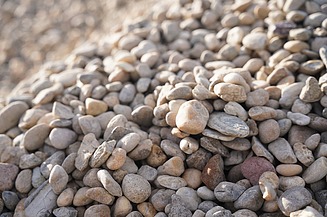
Our product range varies by region. This is due to geological, regulatory and technical conditions. Depending on the location, the type of aggregate (limestone, dolomite, gravel, sand, andesite), grain sizes, recycled content and logistics models vary, aligned with local infrastructure and transport distances. We supply a wide range of materials, including aggregates for asphalt and concrete, sand, gravel, chippings, crushed stone and, in selected countries, hydraulically bound base courses, gabion stone and railway ballast. Specialised services such as drilling and blasting are provided in Austria and the Czech Republic. Our sites are regionally based, with production located close to areas of demand. This ensures short transport routes, high availability and cost-effective delivery distances even during peak demand periods. At the same time, we also support longer-distance deliveries (e.g. by rail), where required.
Our products
In selected countries, our stone and gravel products cover the full range of mineral building materials – from traditional sand, gravel and crushed stone gradations to hydraulic engineering stone, special grain sizes, project-specific speciality products and recycled materials. In this way, we supply the building construction, civil engineering, traffic route construction, concrete and asphalt industries, as well as infrastructure and hydraulic engineering projects, reliably and standards-compliant.-
Standard products: sand, gravel, grit and crushed stone
- Sand (asphalt aggregate, concrete aggregate, cable sand)
- Gravel in all standard grain sizes (concrete aggregate, filter gravel, etc.)
- Chippings and crushed stone (concrete aggregate, asphalt aggregate, filter gravel, road grit, railway ballast)
- Unbound base course materials (gravel, unbound lower base course, unbound upper base course, loose material)
- All products comply with applicable standards EN 13242, EN 12620, EN 13043, EN 13450
-
Hydraulic engineering stones
- Hydraulic engineering stones for riverbank, embankment and flood protection
- Coarse-grained materials for flood and erosion control
-
Railway construction materials
- Ballast for railway lines
- Sub-base and fill materials for railway infrastructure
- Special grain sizes for track construction projects
-
Speciality products and project-specific solutions
- Special grain sizes for special-purpose concretes and technical applications
- Customised aggregates for industrial and infrastructure projects
- Materials for gabions, noise barriers and landscaping
- Big bag filling available upon request
-
Mineral construction and demolition waste / circular economy
- Acceptance of building rubble, concrete rubble, road rubble and asphalt
- Acceptance of excavated materials
- Processing into quality-assured recycled building materials
- Use as technical backfill or base course material
- Higher-value use as aggregates in asphalt or concrete
Drilling and blasting for efficient extraction of raw materials
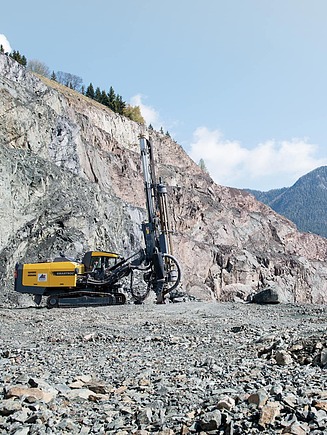
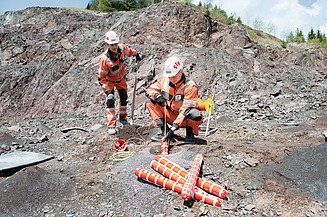
In selected countries (Austria), we provide drilling and blasting services for the efficient and cost-effective extraction of raw materials used in high-quality aggregate production. Our teams provide support throughout planning, execution and safety management of the extraction process. The scope of our services includes 3D face surveying, profile surveying, the preparation of drilling and blasting plans, as well as vibration and noise measurements. We also carry out borehole trajectory measurements to ensure maximum accuracy and optimal fragmentation. This approach allows us to combine efficient raw material extraction with a maximum level of process reliability and operational safety.
Aggregates and areas of application
Our aggregates form the basis for a wide range of technical applications in building construction, civil engineering, traffic route construction and hydraulic engineering. The following overview illustrates which product group is typically used in which areas of application.
| Product group | Typical grain sizes / specifications | Areas of application |
|---|---|---|
| Sand (asphalt aggregate, concrete aggregate, cable sand) | 0/2, 0/4, crushed sand, concrete sand, masonry sand | Concrete production, mortar, pipeline construction, backfilling |
| Gravel in all standard grain sizes (concrete aggregate, filter gravel, etc.) | 4/8, 8/16, 16/32 | Concrete, drainage systems, road construction, gardening and landscaping |
| Chippings and crushed stone (concrete aggregate, asphalt aggregate, filter, road grit, railway ballast) | 2/4, 4/8, 8/11, 11/16, 16/22, 22/23, 4/8, 8/16, 16/32, 32/63 | Base courses, frost protection, road construction, sub-base |
| Aggregates for concrete (EN 12620) | Concrete gravel, concrete chippings, specified gradations | Ready-mixed concrete, precast elements, building construction, civil engineering |
| Aggregates for asphalt (EN 13043) | High-grade chippings, asphalt aggregates | Asphalt surface courses, binder courses, base courses |
| Unbound base course materials (grader, unbound lower base course, unbound upper base course, loose material) | 0/16, 0/32, 0/45, 0/63 | Road construction, utility trenching, infrastructure, sub-base |
| Hydraulic engineering stones | 45/125, 60/300, 300/1000 | Riverbank and embankment protection, flood protection, hydraulic engineering |
| Gabion stone | 63/125, 90/150 | Gabions, noise barriers, slope stabilisation, landscaping |
| Drilling and blasting (AT/CZ) | - | Raw material extraction, quarry development |
| Recycled building materials (RC) | RC aggregate, RC mixes | Base courses, sub-base, sustainable infrastructure |
This provides our clients with a comprehensive, standard-compliant and regionally available product range that reliably meets the requirements of modern construction, infrastructure and industrial projects – from standard grain sizes to specialised solutions.
Recycling and waste management
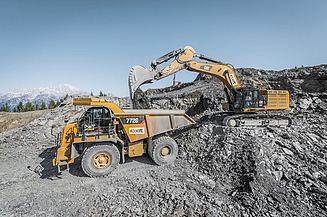
Our sites operate facilities approved by the relevant authorities for:
- Acceptance and processing of excavated material
- Processing of construction and demolition waste (e.g. concrete rubble)
- Monitoring in accordance with waste management regulations
- Separate collection of hazardous and non-hazardous waste
These authorisations ensure legally compliant processes and enable closed-loop regional material cycles.
CE marking and factory production control (FPC)
To ensure supply capacity in the building construction, civil engineering and traffic route construction sectors, compliance with standards, along with supporting certifications and documentation, are essential. We meet these requirements at all sites where aggregates are manufactured or supplied. This includes:
- CE marking in accordance with the Construction Products Regulation (EU 305/2011)
- Factory production control (FPC) in accordance with:
- EN 12620 – aggregates for concrete
- EN 13043 – aggregates for asphalt
- EN 13242 – aggregates for unbound and hydraulically bound materials
These certifications are a fundamental requirement for supplying concrete plants, asphalt plants and infrastructure and traffic route construction projects, and are therefore part of our standard practice. In Poland, we also hold Factory Production Control (FPC) certification under System 2+, which fully meets European regulatory requirements.
Sustainability at roxit
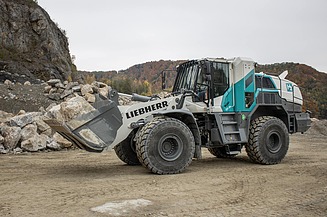
Sustainability is an integral part of how we work. We focus on forward-looking raw material extraction planning and consistently incorporate recycled building materials into real-world construction and infrastructure projects. At the Kanzelsteinbruch quarry in Gratkorn, roxit is testing a hydrogen-powered wheel loader to further advance low-emission drive technologies for heavy construction machinery. By processing concrete rubble, asphalt rubble and excavated soil, we close regional material loops and reduce the use of primary raw materials. This allows us to support our clients in meeting their ESG, procurement and climate targets, from low-carbon building materials to verifiable recycling rates. For more information about sustainability and how we support you in this respect, see here.
Inquire about stone and gravel now and find out more
Are you looking to purchase stone and gravel for your construction project? Together, we will review potential sites, regional availability and cost-effective delivery distances, and determine which grain sizes, quantities and logistics options best fit your requirements.
Get in touch!Frequently asked questions (FAQ) about purchasing stone and gravel
-
Do any of your sites offer landfill facilities?
Yes. At some sites, excavated soil can be accepted as a cost-effective return load.
-
Are alternative technologies and propulsion systems in use?
By using machinery and equipment with alternative power sources – such as hydrogen-powered wheel loaders in Gratkorn and energy recovery technologies during material transport in Saalfelden – we are driving forward cutting-edge technologies.
-
Is material available in big bags?
Yes. At some sites and upon request, we supply our products in big bags.
-
Do you also sell with delivery free on site?
Depending on the country, delivery can be arranged either ex works or free on site.
-
Do you also supply private individuals or only large companies?
We primarily supply wholesale and industrial clients. However, at most of our sites, sales to private clients are also possible.
-
Do your products meet the required certification and quality standards?
Yes. All our products comply with applicable EU standards, and we also operate a quality assurance system. The physical properties of our products are regularly tested in accredited laboratories.
-
How can I get a quick and accurate quotation?
To ensure a fast response, please contact the plant representative responsible for your region. To prepare a quotation, we require detailed information about the product, quantity and expected delivery schedule. Please see the Contact section to find the appropriate contact person.
-
Are there regional restrictions or differences in the product range?
Yes. The product range differs significantly by region, which is typical – and necessary – for the extraction of raw materials. Differences between countries include:
- Type of raw materials
- Depending on local geological conditions (e.g. dolomite, limestone, gravel, sand)
- Product ranges & grain sizes
- Driven by national standards and market requirements
- Recycled content
- Influenced by regulatory frameworks and market demand
- Type of raw materials